- Oil Supply Crisis Won't End Quickly
Lt. Col. Daniel Davis & Art Berman
May 28
https://www.youtube.com/watch?v=IyVUgJ_5H5k
Summary: This provides a very clear and helpful description of the types, sources, and uses of crude oil.
- Trump's Oil Confabulations
Larry C Johnson
May 30
https://larrycjohnson.substack.com/p/trumps-oil-confabulations
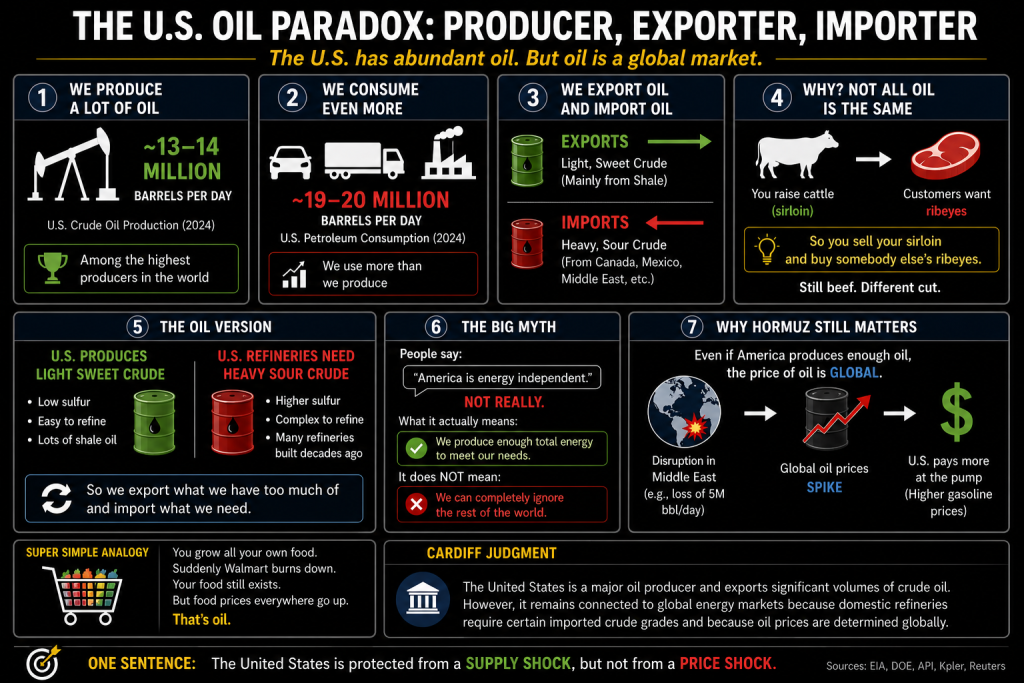
Summary: Johnson lays out the situation Berman describes above, in a brief readable form, illustrated with this helpful graphic (click to expand):
- The Sour Crude Problem I: Why America’s Refineries Depend on Imports and Why It is Relevant to the Strait of Hormuz
Larry C Johnson
July 10
https://larrycjohnson.substack.com/p/the-sour-crude-problem-why-americas
Summary: This is an excellent, succinct explanation of the issues generated by the difference between sweet (light) and sour (heavy) crude and its relationship to our legacy refining capacity.
- The Sour Crude Problem II: The Sour Crude Problem: How Long Can the Salt Caverns Keep Bridging the Gap?
Larry C Johnson
July 10
https://larrycjohnson.substack.com/p/part-ii-the-sour-crude-problem-how
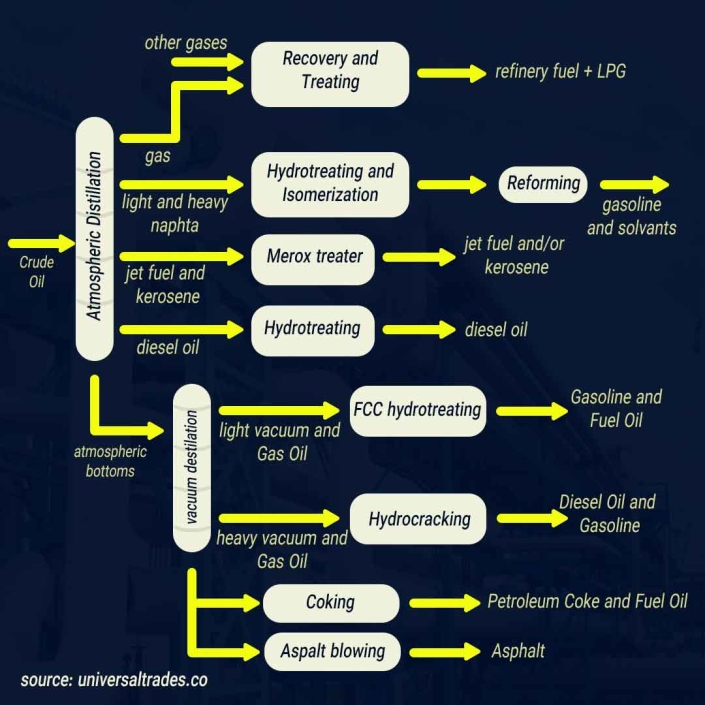
Summary: This is a detailed and fascinating examination of the complexities of how the Strategic Petroleum Reserve actually works — the geometry and limitations of the salt caverns, how many times they can or cannot be drawn down, and what this means for estimating the timing of when we "run out." Another helpful graphic (click to expand):
- What Triggered Trump to Make the Deal with Iran?
Larry C Johnson
Jun 18
https://larrycjohnson.substack.com/p/what-triggered-trump-to-make-the
Context: Trump mentioned on June 17 that he'd been told we have 4 weeks of reserves left, and suddenly changed his negotiating posture from intransigence to conciliation.
Summary: In other interviews I've heard, the issue of the petroleum reserve levels of various countries has been discussed. The capacity of many of these is seriously short, many measured in days or weeks. This post is Johnson's first reference to the (political) use of the U.S. Strategic Petroleum Reserve (SPR) to prevent gas/diesel prices from skyrocketing. His major point is to outline the various delaying factors that will prevent the restocking of the SPR before it "runs out."
These factors will have effect even if the Strait of Hormuz is "opened" immediately. They include — among others —
- the damage affecting various oil/gas facilities in the Gulf area,
- the speed-reducing buildup of barnacles on the hulls of stationary tankers,
- the scheduling involved in the massive number of tankers trapped in/out of the Gulf, and
- the unwillingness of Lloyds of London and other insurers to insure ships until the Strait of Hormuz is de-mined, which the Pentagon has estimated could take months (perhaps as long as December).
Johnson's analysis of this starts at "The Anchored Tanker Problem" heading, below his detailing of the current "Memorandum of Understanding" between the U.S. and Iran.
- Strategic Oil Reserve Nears Collapse... US Must Choose: Guns or Butter
Larry C Johnson
Jun 21
https://larrycjohnson.substack.com/p/strategic-oil-reserve-nears-collapse
Summary: Johnson provides details here of how the SPR works. The crude oil is stored in caverns in the Southeast, with a capacity of roughly 730 million barrels (MB). A limiting factor is their structural integrity, which may be compromised if they drop below 20% of capacity (145 MB). The total availability of crude between its current reduced level (about 340 MB on June 12) and that 20% is only about 200 MB, which at current draw-down levels of 16 MB will last about 12 weeks.
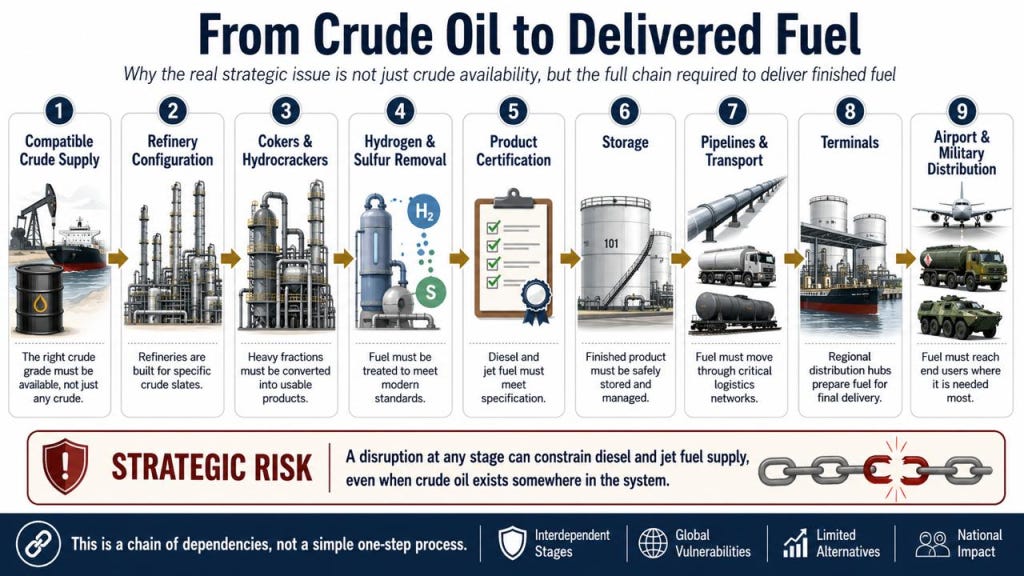
In the current war footing, the government is faced with deciding how the remaining capacity for producing diesel is to be allocated. If the war-footing is continued, the military will use most of it, quickly destabilizing our diesel-fueled economy. If that is to be dropped, the war presence will have to be abandoned, which Trump is under pressure from powerful influences not to do. This piece provides the following helpful graphic (click to expand):
- 13-18 DAYS: THE PRACTICAL DIESEL BUFFER. . . Does It Preclude Bombing Iran?
Larry C Johnson
Jun 26
https://larrycjohnson.substack.com/p/13-18-days-the-practical-diesel-buffer
Summary: Although the time estimate was revised later, this fairly technical discussion is quite helpful in understanding of how diesel and jet fuel (competing products) are made and distributed.
It isn't just oil and gas. Johnson gathered more information for a subsequent post.